When you first start baking, it’s easy to focus on the fun things like cake decorating tools, colourful sprinkles and different baking moulds. But before buying all those extras, there are a few basic tools that are much more important.
One of them is a good set of measuring cups and spoons.
Baking is a little different from everyday cooking. With cooking, you can often add a little more of something and adjust the taste as you go. With baking, measurements can have a much bigger effect on the final result.
That’s why having reliable measuring tools can make such a difference, especially when you’re still learning.
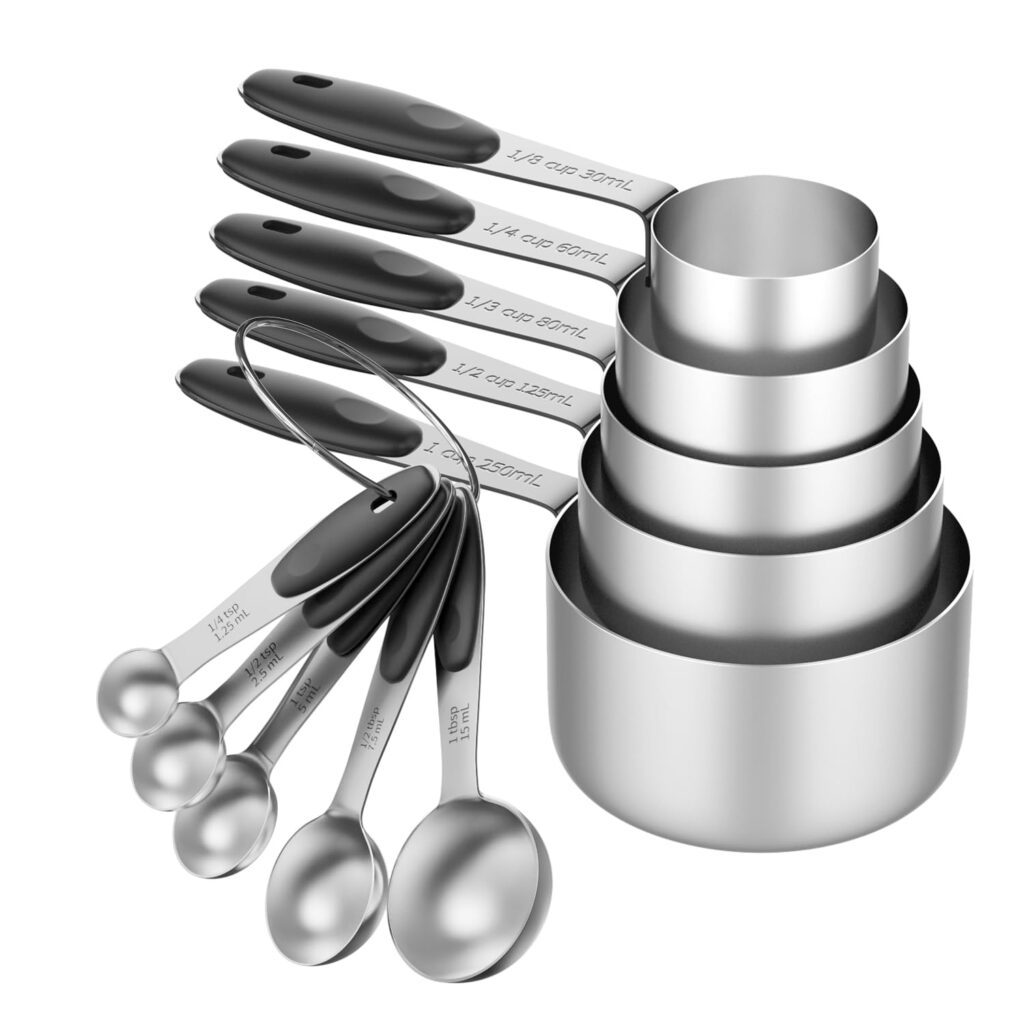
measuring cups and spoons
Why Are Measuring Cups and Spoons Important?
Imagine following a cake recipe that requires one teaspoon of baking powder.
If you simply estimate the amount using an ordinary spoon from your kitchen, you might accidentally add too much or too little.
That small difference can affect the texture of your cake.
Measuring cups and spoons are designed to help you use more consistent quantities when following recipes.
They are particularly useful for ingredients such as:
- Baking powder
- Baking soda
- Vanilla extract
- Milk
- Oil
- Sugar
- Flour
- Spices
- Cocoa powder
Having the right measurements makes it easier to repeat a recipe and get similar results each time.
Measuring Cups vs Measuring Spoons
Although they are often sold together, measuring cups and measuring spoons have different purposes.
Measuring Cups
Measuring cups are generally used for larger quantities of ingredients.
Depending on the recipe and the type of measuring cups you’re using, they can be useful for ingredients such as flour, sugar, milk and other liquids.
Measuring Spoons
Measuring spoons are better for smaller quantities.
They’re especially useful for ingredients such as baking powder, baking soda, salt, vanilla extract and spices.
A basic set will usually include several different sizes, which makes it much easier to follow recipes accurately.
Dry and Liquid Measurements
One thing that can confuse beginners is the difference between measuring dry and liquid ingredients.
Dry ingredients and liquids behave differently, so using the appropriate measuring method is important.
For example, flour shouldn’t simply be packed tightly into a cup unless the recipe specifically says so. A packed cup can contain considerably more flour than a loosely filled one.
For liquids, a cup designed specifically for liquid measurements can make it easier to see the measurement level.
If you’re following recipes from different sources, it’s also worth checking whether they use cups, millilitres or grams.
How to Measure Flour Correctly
Flour is one of the ingredients where measurement can make a noticeable difference.
If you scoop flour directly from the bag and press it down, you can end up with more flour than the recipe intended.
A simple method is to lightly spoon flour into the measuring cup and then level the top with the back of a knife.
This helps you avoid adding unnecessary extra flour.
If a recipe gives the measurement in grams, using a kitchen weighing scale can be even more precise.
How to Measure Small Ingredients
When using ingredients such as baking powder, baking soda or vanilla extract, measuring spoons are incredibly useful.
Instead of guessing what a teaspoon looks like, you can use the correct spoon size.
Try to fill the spoon according to the recipe rather than simply pouring the ingredient until it looks right.
It might seem like a small detail, but these little habits can make your baking much more consistent.
What Should You Look for When Buying Measuring Cups and Spoons?
You don’t need to spend a lot of money on measuring tools.
A simple, durable set is usually enough for everyday home baking.
Here are a few things I would look for.
Clear Measurements
The measurements should be easy to read.
If the markings are difficult to see, using the cups and spoons can become unnecessarily frustrating.
Durable Material
Look for something that feels sturdy enough for regular use.
Plastic and stainless-steel sets are both commonly available, so you can choose whichever suits your kitchen and preferences.
Easy to Clean
Baking can get messy quickly.
Choose a set that’s easy to wash and doesn’t have lots of tiny spaces where flour or other ingredients can get stuck.
Different Sizes
A useful set should contain multiple sizes rather than just one cup or spoon.
Having different measurements available means you won’t have to repeatedly estimate quantities.
My Pick for Beginners
If you’re starting to bake at home, I’d recommend keeping a basic set of measuring cups and spoons in your kitchen.
They don’t take up much space, they’re easy to use and they can be useful for almost every recipe.
The set I’m recommending here is a simple option for everyday baking and can be useful when measuring both larger and smaller quantities.
👉 Measuring Cups and Spoons:
here
Affiliate disclosure: This post contains an affiliate link. As an Amazon Associate I earn from qualifying purchases.
Common Measuring Mistakes to Avoid
Even with measuring tools, there are a few mistakes beginners can make.
Don’t Guess Measurements
If the recipe says one teaspoon, use a measuring spoon rather than estimating.
Don’t Pack Flour Down
Unless the recipe specifically asks you to, avoid pressing flour into the cup.
Level Dry Ingredients
For dry ingredients, level the top of the measuring cup or spoon when the recipe calls for a level measurement.
Read the Recipe First
Before starting, look through the entire recipe and check what measurements you’ll need.
This can save you from discovering halfway through that you’re missing a particular measuring spoon or ingredient.
Are Measuring Cups and Spoons Worth Buying?
Definitely, especially if you’re new to baking.
They’re inexpensive compared with many other baking tools, don’t take up much storage space and can be used in countless recipes.
Even if you eventually start using a kitchen weighing scale for more precise measurements, measuring cups and spoons will still come in handy for many everyday recipes.
They’re one of those simple kitchen tools that you may not think much about until you don’t have them.
Final Thoughts
Good baking doesn’t always require expensive equipment. Sometimes, the simplest tools are the ones you’ll use the most.
A reliable set of measuring cups and spoons can make following recipes easier and help you become more consistent with your baking. Once you get into the habit of measuring ingredients properly, you’ll probably notice that recipes become easier to follow as well.
If you’re building your baking collection from scratch, I’d recommend getting the basics first. A measuring set, mixing bowls, a weighing scale and a few other practical tools are a much better starting point than filling your kitchen with gadgets you may rarely use.
And remember, even with perfect measurements, baking is still about practice. Don’t be discouraged if your first few cakes or cookies aren’t exactly what you expected. Keep trying different recipes, learn from each attempt and enjoy the process.
After all, some of the best parts of baking happen when you’re simply experimenting in the kitchen. 🧁